
The project in summary
Multi-year Research Project on the Effect of Clowning on Displaced Children and Aid-Workers.
The project in detail
In 2025/2027 RED NOSES International (RNI) intends to launch a multi-year research project to:
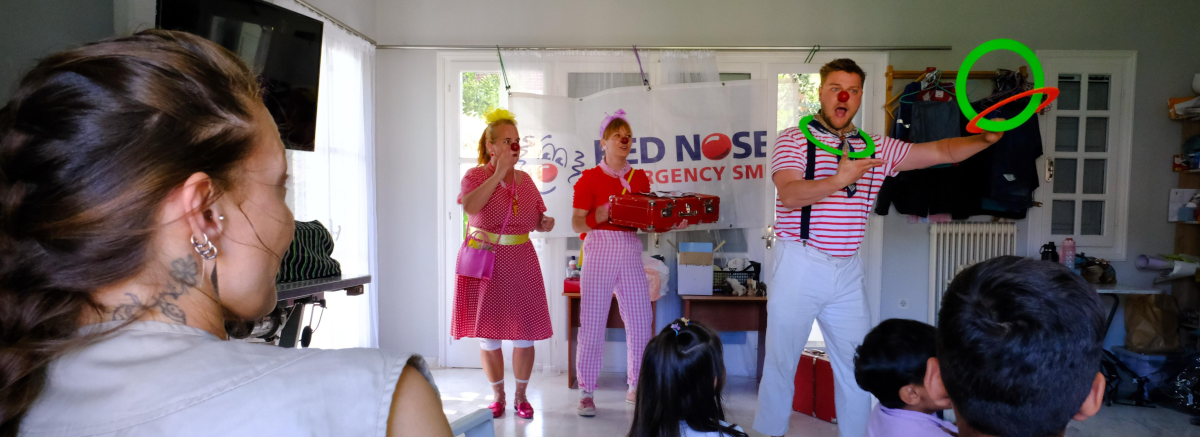
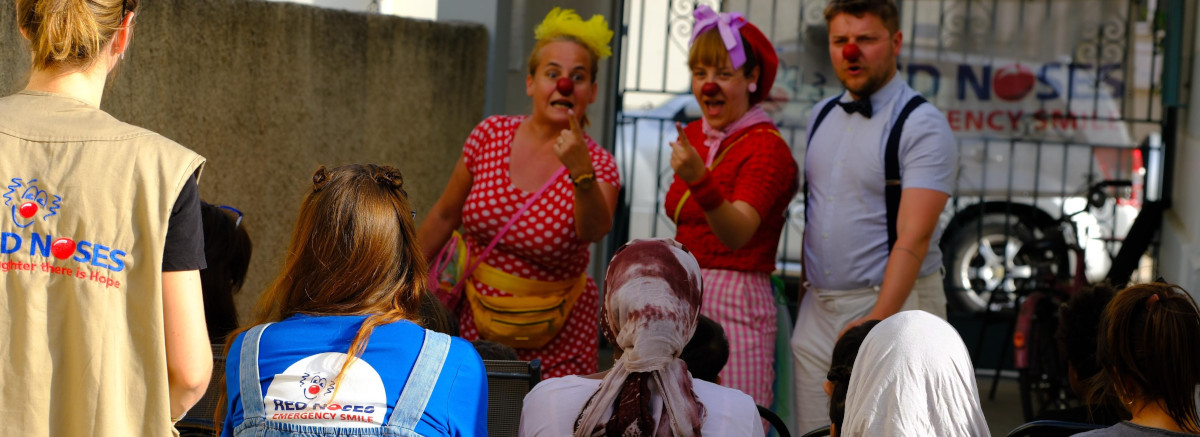
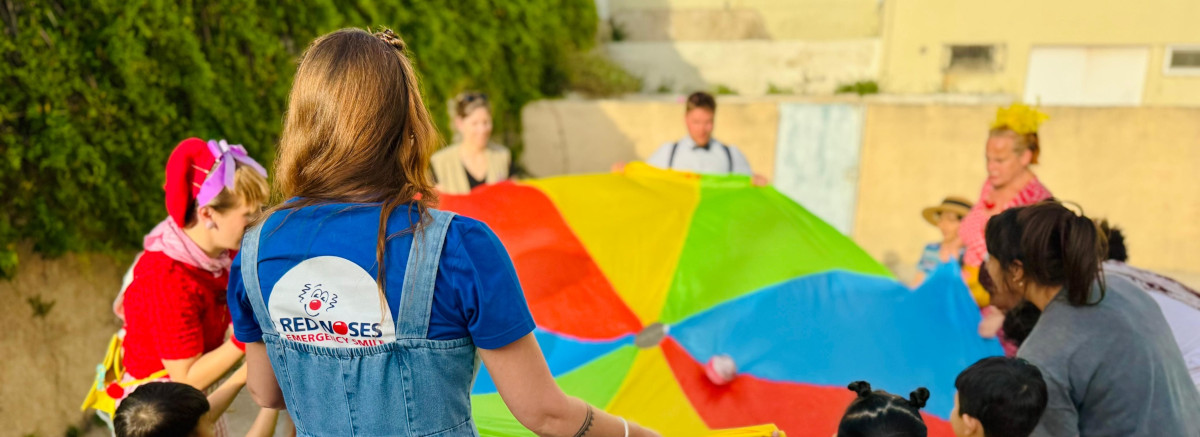
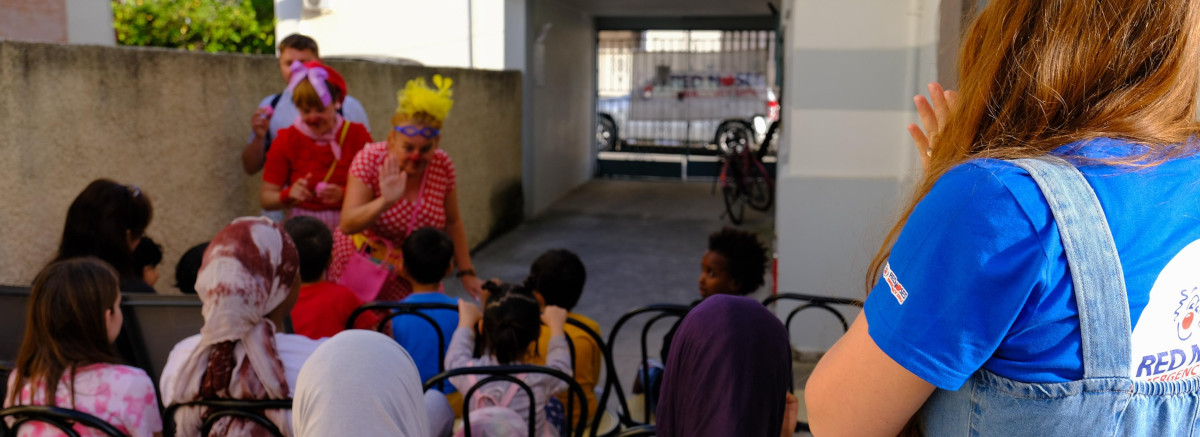
- assess the impact of clowning activities on the emotional well-being of displaced children and Aid-Workers, and to understand how humor and playfulness can be integrated into humanitarian work;
- fill in the gap in the literature about the impact of arts for health in humanitarian settings;
- provide a basis for strategic policy decisions by local government and international organizations aimed at improving the living conditions of people involved in forced migration, including children.
Beneficiaries (throughout the duration of the project)
Direct Beneficiaries*Y
– 1 Lead Researcher;
– 2 Research Assistants on the field.
Indirect Beneficiaries*Y
– Stakeholders and partners on the field (collaborating on the research project):
. approximately 150 minors and youth on the move and 150 UAM (8-17 ages);
. approximately 100 parents/caregivers;
. approximately 400 adults (Single Men and Single Women, mothers/fathers on the move);
. approximately 100 Aid Workers, volunteers, medical staff from humanitarian aid organizations.
– International Scientific Community (at the end of the research project).
The Emergency Smile Research Project 2025/2027, also with Alta Mane support, foresees the following activities:
Y1 – 2025: Project Set-up and Initial Data Collection
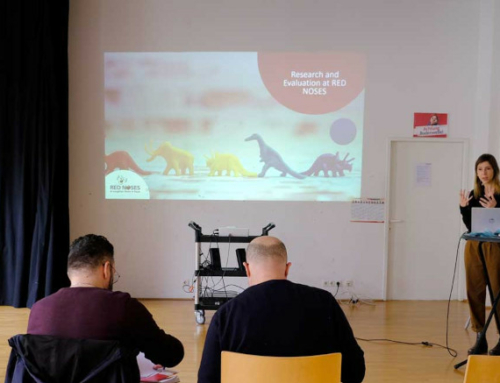
– research onboarding process and engagement, and Desk Review;
– research proposal and data collection plan, approval by an independent ethical board;
– training of 2 research assistants on the field in conducting data collection with children and adults living and working in crisis settings;
– Emergency Smile Mission to Lesbos;
– inception of the Data Collection Activities.
Y2 – 2026: Continued Data Collection and Preliminary Analysis
– Data Collection and Preliminary Analysis;
– Emergency Smile Mission to Lesbos;
– production of a Preliminary Manuscript.
Y3 – 2027: Final Data Collection, analysis, and dissemination of findings
– finalization of the process of Data Collection and Analysis;
– Emergency Smile Mission to Lesbos;
– draft of one or more academic papers based on the findings of the research;
– submission for publication of at least one academic paper on academic journals and international share of findings.